Commercial Waste Mottingham: Recycling & Sustainability
 At Commercial Waste Mottingham we focus on building a truly eco-friendly waste disposal area for businesses across Mottingham and the surrounding boroughs. Our approach to the sustainable rubbish area is pragmatic and measurable: we combine on-site segregation, efficient collection routes and partnerships with local facilities so that waste from shops, offices and light industry is diverted from landfill. Our mission is to make commercial waste in Mottingham a resource, not a burden, while reducing carbon footprint across the supply chain.
We align with the boroughs' approach to waste separation, working closely with policies across Bromley and Greenwich and neighbouring authorities to ensure consistent sorting of mixed recycling, food waste and residual material. This coordination helps businesses comply with local rules on source separation and makes our eco-friendly rubbish solutions easier to adopt. Clear signage and tailored bin systems are provided so every site we service understands what goes where, from glass and cans to paper and food waste.
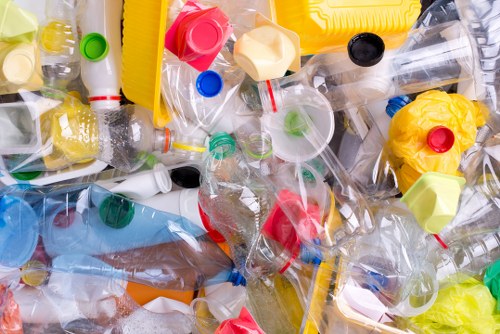
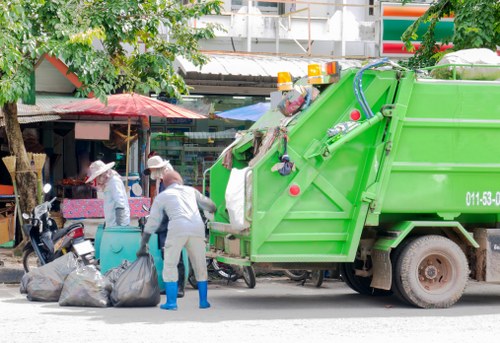 Practical recycling activity in the area includes segregated collections for cardboard and paper, glass, plastics, metal cans, food waste and bulky items such as furniture and small electricals (WEEE). We support reuse and refurbishment where possible and operate commercial collection streams for construction and demolition materials separately. Typical streams we handle include:
- Cardboard and paper for pulping and recycling
- Mixed dry recyclables (plastics, cans, glass)
- Food waste for anaerobic digestion
- Commercial timber and inert construction aggregates
- WEEE and batteries diverted to specialist processors
Local Transfer Stations & Materials Recovery
We use a network of local transfer stations and materials recovery facilities (MRFs) that serve south-east London and the surrounding boroughs to minimise haulage miles. These transfer points reduce double-handling and connect businesses to high-quality recycling streams. By consolidating loads at nearby civic amenity sites and transfer hubs in the region, we keep collections efficient and ensure materials are sent to the right processors, including composting and anaerobic digesters for organic waste.
 Partnerships with charities and community organisations are central to our sustainable strategy. Rather than sending reusable goods to landfill, we work with local charity shops, furniture reuse groups and social enterprises to maximise reuse. These collaborations create social value as well as environmental benefits—furniture, textiles and working electronics are diverted to charity partners who refurbish and resell items, or redistribute them through local support programmes. We also coordinate donation routes so that usable items collected from businesses are delivered quickly and safely.
Low-Carbon Vans & Fleet Innovation
Our Mottingham commercial waste fleet is transitioning to low-emission vehicles, with a focus on low-carbon vans and route optimisation. We operate a mix of electric and low-emission vans for light collections, and use Euro VI vehicles and emission-cutting tech for heavier loads. GPS routing, load consolidation and scheduled pickups reduce vehicle miles and idling. Combined, these measures significantly cut greenhouse gas emissions associated with commercial waste collections in the area.We have set a clear recycling percentage target to guide our work and demonstrate progress: 70% recycling rate for commercial waste by 2030. This target is ambitious but achievable through improved segregation at source, better on-site storage for recyclables, expanded food waste capture and stronger reuse partnerships. Progress is tracked quarterly and we publish summary metrics so clients can see the reduction in residual waste volumes and the increase in diverted materials.
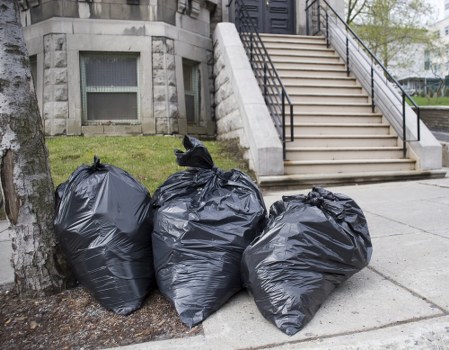 Designing a truly sustainable rubbish area means more than bins. We advise on site layout, providing segregated bays, compactors and secure storage for recyclables that prevent contamination. For food waste we offer sealed containers and regular collections to support anaerobic digestion or composting. For construction and refurbishment projects we deliver skip management plans that prioritise on-site segregation, recovery of plasterboard, metals and timber, and reuse of materials where safe to do so. Reducing contamination is essential; clear labelling and staff training reduce rejection rates at MRFs.
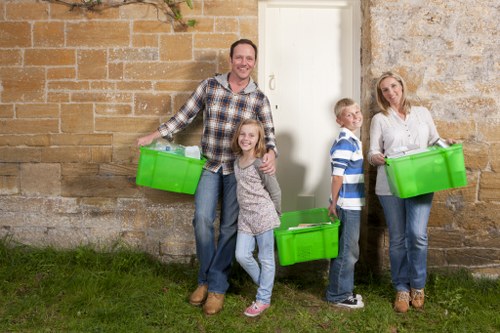 In summary, Commercial Waste Mottingham combines local knowledge with practical solutions to deliver a resilient, eco-friendly waste disposal area and a robust sustainable rubbish area for businesses. By leveraging local transfer stations, fostering partnerships with charities and social enterprises, and investing in low-carbon vans and smarter collection systems, we help businesses meet regulatory expectations and environmental goals. Join us in moving commercial waste in Mottingham from problem to potential—separate smarter, reuse more and lower your carbon impact today.
