Commercial Waste in Mottingham
Commercial waste in Mottingham needs a service that is straightforward to arrange, clear about what can be taken, and careful with how different business materials are handled. We provide waste removal for workplaces that want regular or one-off collection of everyday office refuse, bulky items, mixed recyclables and other non-hazardous commercial material. The aim is to keep the process practical for local businesses while leaving room for the right treatment route for each load.
Our service is built around planned removal rather than guesswork. That means looking at the type of waste, the access to the premises, any loading limits, and whether items need separating before collection. If your business is clearing out a single room, replacing old furnishings, or managing ongoing trade waste, it helps to know what the collection will cover before the work starts. That is why clear descriptions of the load matter. Simple, accurate information makes the arrangement easier for everyone involved.
For a quotation, it is usually best to provide the waste type, approximate amount, and whether the load is already gathered or still spread across the site. A brief list can be enough, especially where materials are mixed. If you are ready to compare options, you can also review our pricing and quotes page for more detail.
Office and workplace waste collection
Office and workplace waste often includes desks, chairs, filing units, archive boxes, packaging, worn carpet tiles, and general rubbish from moves or refurbishments. We handle these collections with a focus on keeping business disruption manageable. Where items are reusable or suitable for separate processing, they can be loaded apart from general waste. That is useful when a premises is being refurbished in stages, because it helps keep the working area clearer while the project continues.
Some offices want support with a single bulk clearance, while others need a repeat collection for accumulated day-to-day waste. The right approach depends on how quickly waste builds up, how much storage space is available, and whether the material is mostly paper, furniture, or mixed items. Our waste removal service can be tailored to those different needs without turning the arrangement into a larger project than necessary. If you have several waste streams on site, it helps to say so early and keep the description as accurate as possible.
Business rubbish and mixed commercial loads
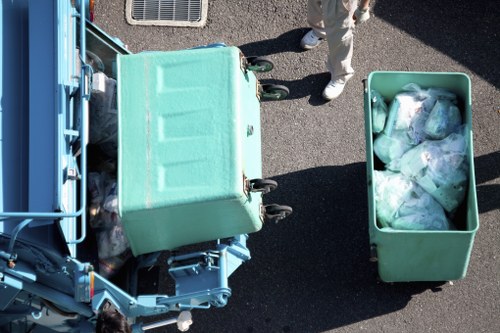
Commercial premises rarely produce one perfect category of waste. A shop back room, workshop, small warehouse or shared office may have a mixture of cardboard, plastic wrap, broken fixtures, shelving offcuts, and general black bag waste. Mixed commercial loads need sensible sorting so that recyclables are not treated the same way as everything else. We can remove these loads when access and item type are clear, and the collection can be planned around how the waste is stored.
For businesses that want to keep things orderly, it often helps to decide whether the priority is a full clearance or selective removal. A full clearance works well when a room is being emptied for re-use, while a selective approach suits ongoing operations where some equipment stays in place. Either way, the important part is describing what is there rather than using broad labels alone. If you are comparing service options, take a look at the business waste removal page as part of your planning.
Useful details to include when asking for a quotation are the item types, quantity, floor level, any lifts or stairs, and whether parking or loading space is nearby. That information helps us work out the most suitable approach and avoids unnecessary back-and-forth. If you are preparing a wider clear-out, it can also help to keep a short note of any larger items that need separate handling.
Bulky furniture and fittings from commercial sites
Commercial sites often need furniture removed when premises are being refitted, reopened, downsized, or updated. That can include desks, task chairs, meeting tables, cabinets, reception furniture, shelving, and loose fittings that are no longer needed. We can remove these items as part of a wider waste collection or as a standalone clear-out if the furniture is taking up valuable space. The key point is that the removal should suit the site layout and the items involved.
Where furniture is still usable, it may be sensible to keep it separate from damaged or broken pieces. That makes sorting simpler and can support a cleaner, more controlled clearance. It also helps to identify any items that are fixed, especially if they need to be dismantled before loading. You may also want to consult the furniture clearance page if furniture makes up the main part of your waste plan. For collections involving different kinds of business refuse, the exact mix should always guide the arrangement.
We can also deal with items that have become awkward to move because they are heavy, bulky or inconveniently placed. In those situations, it is useful to say whether the waste is on the ground floor, in a store room, or on a level that involves stairs. A clear description helps set expectations and keeps the quotation process grounded in the actual work needed. Practical preparation usually makes the collection itself smoother.
Recycling-aware waste handling

Many business customers want a collection that keeps recyclable material separate where possible. Common examples include cardboard, office paper, plastics from packaging, metal shelving parts, and some clean wooden items. Not every load can be divided neatly, but a sensible separation strategy can reduce avoidable mixing. Our service is suitable when you want waste removed without losing sight of what can be directed to the appropriate route afterwards.
This approach is especially helpful after deliveries, fit-outs, or storage clearances, because those jobs often generate a blend of packaging and surplus material. Recyclable waste is easiest to handle when it is grouped together before collection, but we can also discuss loads that are mixed and need sorting at the point of removal. If sustainability is part of your decision-making, the recycling and sustainability page gives a useful companion overview. Not every item can be treated the same way, so the composition of the load remains important.
It is sensible to separate out anything that needs special handling, as that protects the rest of the load from being treated as a general collection. If you are uncertain whether a material belongs with general commercial waste or needs a different route, it is better to flag that early than to leave it until the day of removal. Clarity first tends to make the process simpler and helps keep the collection aligned with the waste type.
About Mottingham
Mottingham is a south-east London district with a layered local identity shaped by its position on the edge of Greater London and its long connection to the historical parish landscape of Kent. Today it sits within the London Borough of Bromley, but the name still carries older associations that pre-date modern borough boundaries. The area grew around the village centre and then changed as rail travel, suburban building and road connections encouraged residential development. That shift left a pattern common to many parts of outer London: older lanes and local landmarks alongside later housing estates and commuter-era streets. Mottingham railway station remains one of the area’s most recognisable transport points, linking the district with central London and neighbouring parts of south-east London. Green space is an important part of the locality too, with Mottingham playing a role in access to wider open land and recreational routes around nearby parks and commons. Eltham Palace lies close by and is one of the better-known historic attractions in the wider district, combining medieval and later architectural layers in a single site. Nearby, Southend Park and other local open spaces provide everyday amenity, while the streets around the centre retain the feel of a settled residential community rather than a purely commercial strip. The area’s history is also reflected in local churches, long-established route names and the way neighbourhood boundaries overlap with adjacent places such as Eltham and Grove Park. As a result, Mottingham reads as both a distinct locality and part of a larger south-east London urban fabric, with everyday life shaped by housing, transport and access to nearby green corridors.
Clearance for garages, storage rooms and back-of-house areas
Garages, stock rooms and back-of-house spaces often become the place where businesses keep damaged items, obsolete fixtures, old packaging, spare furniture and materials awaiting disposal. Over time these spaces can become difficult to use properly. A clearance service gives you a way to recover the area without having to manage the load in small, awkward stages. That is especially useful when a room needs to be prepared for storage, maintenance, or a change of use.
These collections are often more efficient when items are grouped by type beforehand, but we can still work with loads that have been stored in a mixed way. Where the waste includes shelving, boxes, broken equipment or leftover commercial stock, it is best to say what needs removing and what is staying in place. If the room holds a particularly bulky mix, the garage clearance page is a useful reference point. The general principle remains the same: the more plainly the waste is described, the easier it is to organise the right collection.
We also look at access to the space, because narrow entrances, steps or awkward turning points can change how the collection is planned. If there are large items at the rear of a property or in a storage compound, let us know whether they can be brought to the front or need to be collected from where they are. Access details matter as much as the waste list when the site is compact or shared with other users.
Special item disposal for business premises
Some commercial waste requires a more specific disposal plan than general rubbish. This can include fridges, freezers, broken appliances, office electronics that are too bulky for ordinary collection, and upholstered items that need to be handled separately from standard mixed waste. These items may be found in staff rooms, canteens, hospitality areas, or storage spaces within a business property. A targeted collection can keep them out of a general load and make the disposal route clearer.
Where furniture or appliances are the main concern, it helps to name the items individually rather than grouping them into one vague description. That makes it easier to decide whether a mixed collection is suitable or whether a more specific service is needed. For appliance-related work, the fridge and appliance removal page provides a relevant starting point, while larger soft furnishings are also covered on the mattress and sofa disposal page. These pages can help you narrow down the right category before you request a quotation.
If the load includes items with cables, internal components or cooling units, do not assume they should be described as ordinary rubbish. It is better to separate them mentally, and on your list, before the collection is arranged. That way the quotation reflects the real work rather than an incomplete summary. You can request a quotation once you know which items need removal and which route suits them best.
Planning a commercial clearance
Good planning keeps a commercial waste collection focused. Before you send an enquiry, it helps to make a short note of the main item types, how much space they occupy, and whether the waste is already grouped in one place. If the premises has restricted access, loading rules or a shared entrance, include that too. These details do not need to be lengthy, but they should be accurate enough to reflect the job properly. A concise outline saves time later and improves the quality of the quotation.
When several areas are being cleared, a simple list can help: office items, furniture, packaging, general waste, or any special items that need separate handling. You may also wish to note whether the collection is part of a move, refurbishment or routine clean-down. If you are looking at the wider service options first, the waste removal page gives a broader picture of the kind of collections we offer. Keep the note factual and current so that the arrangement is based on the real contents on site.
- List the main items that need removing.
- Note access details such as stairs, lifts or loading space.
- Separate any special items from ordinary mixed waste.
- Use the same description when you ask for the quotation.
Choosing the right collection for your site
Different business premises need different levels of support. A small office may only need a straightforward collection of unwanted furniture and bagged waste, while a larger site may need a more selective approach that keeps recyclable material apart from general rubbish. The useful question is not whether the job is big or small, but how the waste is arranged and what you want done with it. We can help with commercial loads that are ready to be removed in one visit, or with clearer sorting where the site requires a more considered approach.
Where the waste comes from a project, such as a fit-out, handover, stock refresh or room change, it is often helpful to think about the sequence of removal as well as the destination of the waste. Some material may need to go first, while other items can remain until the end of the project. If office contents are involved, the office clearance page is a relevant next step. Keeping the collection tied to the project timeline makes the service more practical and less disruptive.
The last step is usually the quotation request itself. Once you have a clear list and a basic idea of access, send the details through in one message rather than in several incomplete notes. One clear enquiry is usually enough to begin. If you are ready to move ahead, please request a quotation and we will work from the information you provide.